Rooting for Earth is an ecocentric sensing tank exploring how humans can communicate, collaborate and co-create with the more-than-human world. It begins with a fundamental premise: the human-centred paradigm has reached its limits.
Many of the ecological, social and cultural crises we face are consequences of a worldview that places humans outside of, and above, the living systems that sustain us. We have become extraordinarily skilled at designing for the world, managing it and extracting from it. We have become far less skilled at listening, learning and creating together with the living world.
R4E explores what happens when we begin from a different premise: we are not separate from the living world. We are part of it.
What kind of future might emerge when humans and the more-than-human world create together?
There is a limit to what we can do on our own. Personal change matters, and it starts inside each of us. But the next step is collective. So much of what holds us back is disconnection, between each other and between us and Earth, and that needs healing. We have to revive ourselves together.
Traditional think tanks primarily use human intellect to analyse problems and generate ideas. R4E begins from the premise that intelligence is not exclusively human. Forests, soils, fungi, plants, animals, rivers, oceans and ecosystems possess forms of intelligence, communication, adaptation and relational knowledge that humans have only partially understood. A sensing tank expands the process of future-making beyond conventional human knowledge, drawing on sensing, embodied and relational ways of knowing, ecological intelligence, traditional and Indigenous ecological knowledge, scientific and systems-based knowledge, and futures thinking.
R4E's aim is to explore how humans might learn to speak with, listen to and create alongside the living world, not to claim any authority to speak for it.
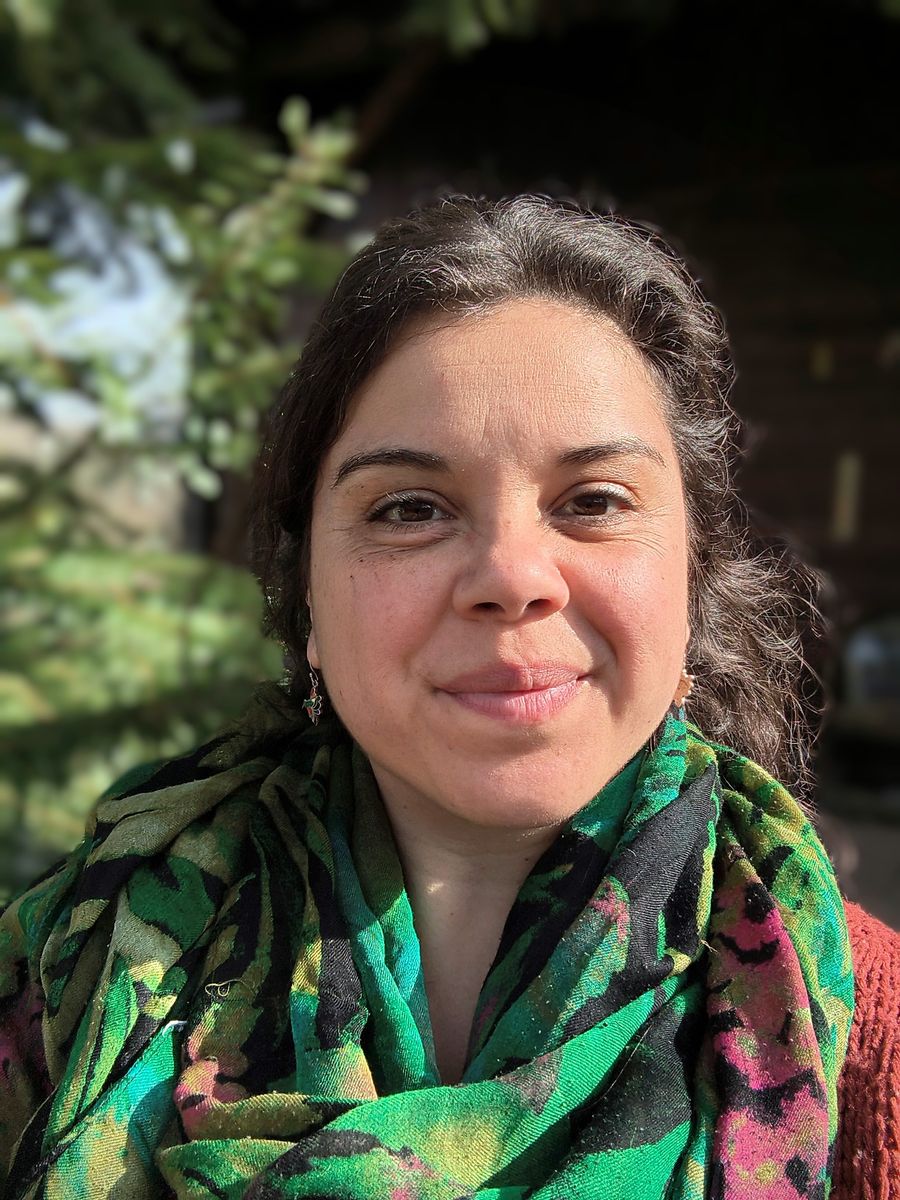
I'm Nathalie Markiefka, a researcher, practitioner and educator based in Czechia, and the founder of Rooting for Earth.
How do we weave ourselves back into the web of life? This question has become a central part of my life's inquiry.
I see co-creating with Earth as the path forward to a future that serves all of life. It stands against what we are doing now: trying to fix nature, deciding for nature, controlling Earth. That comes from an anthropocentric view and the belief that we are entitled to do so.
What we need is to become aware that we are part of nature, and that nature has a lot to teach us about how life wants to evolve: regeneratively, creating beauty, abundance and balance. For that, we need to listen, and we need to step down from the throne we have built for ourselves.
Rooting for Earth is where I explore this, and where I invite you to explore it with me.
I always wanted to work with nature, so I started with the science, with a master's in climate change, agriculture and food security. I believed that if people only knew the facts, they would change.
Running my own NGO for sustainable food systems showed me otherwise. Facts by themselves don't change behaviour.
So I trained as a transformational coach and worked with storytelling, to reach what sits underneath: our beliefs, our fears, the stories that shape how we relate to food. Then came ten years in community supported agriculture, until I had to admit it can't scale on its own. Even there, people remain consumers, just more aware ones.
What needs to shift is our consciousness, so that we no longer see ourselves as separate from Earth. I know this because it happened to me. Through Pam Montgomery's course on co-creative partnership with nature, my ongoing apprenticeship with Carole Guyett, ritual postures with Belinda Gore, and making art with nature, I learned to listen to Earth and feel my body as part of it. My whole worldview began to come from somewhere different. The doubt went.
As a researcher, practitioner and educator, I work with a few questions. What gets in the way, especially in a system built on extraction? Which practices, and which psychological and spiritual understandings, help us? What can we do day to day, in our organisations, businesses and schools, and in any other area of life? And where are the leverage points, the places in the system where awareness-based change can take hold?
 Member, Foundation for Sacred Plant Medicine (FSPM)
I also co-host Voice of the Plants, FSPM's podcast on the wisdom of plants.
If this is the work you feel drawn to, I invite you in.